Human rights
We are committed to respecting the rights of all workers and communities across our value chain.
Standards that protect people first
We assess potential impacts, set clear expectations and collaborate to improve conditions for workers, farmers and communities connected to our ingredients.
At General Mills, we focus on the issues that are most likely to occur and take action to address and prevent them for positive social impact within and beyond our supply chains.
 Akua Krampa, a cocoa farmer in Ghana, rose above all odds to send her three children through high school, an achievement she credits to her increased income from cocoa production. (Photo credit: CARE)
 Where the work begins
Our human rights approach aligns with the United Nations Guiding Principles on Business and Human Rights. We use this framework to assess risk, guide our actions and strengthen how we prevent potential impacts and positively impact people across our value chain.
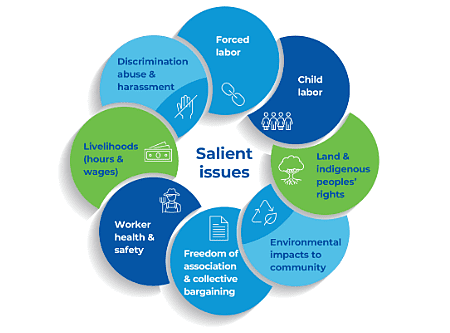
In 2024, General Mills partnered with LRQA, a leading global assurance partner, to re-assess our salient human rights issues, which include: forced labor, child labor, land and indigenous peoples’ rights, environmental impacts to community, freedom of association and collective bargaining, worker health and safety, livelihoods, and discrimination, abuse and harassment.
Some of the ingredients we source— including cocoa, vanilla, palm oil, seafood and sugarcane— are associated with a higher likelihood of human rights risks due to where and how they are produced. We prioritize these ingredients in our collaborative initiatives and sourcing efforts.
Setting the framework
We apply policies and standards across our operations and supply chain, including:
- Human rights policy
- Workplace standards
- Supplier code of conduct
- Ethical sourcing policy
- Palm oil policy
These policies set the standard for labor, safety and fair treatment, and guide how we evaluate and engage suppliers.
Partnering to improve human rights and social outcomes
We engage leading NGOs that work directly with communities in our sourcing regions to positively impact people and improve outcomes.
Since 2023 we’ve advanced our philanthropic partnership with Earthworm Foundation to support programs that strengthen local communities’ land rights and land tenure in key palm oil supply sheds in Brazil, Indonesia and Guatemala. In 2025 more than 2,300 farmers in Indonesia were trained on Good Agricultural Practices.
Marking 10 years of partnership in 2025, we continue our philanthropic partnership with CARE to support cocoa-growing communities in Ghana and Côte d’Ivoire with financial inclusion, women’s empowerment and child protection programs. To date, we’ve supported nearly 42,000 cocoa farmers and 100,000 community members in 50 communities.
These organizations not only drive positive social impact, but they also enable us to ensure our strategy is informed by communities’ voices in the key supply sheds we depend on.
How change takes hold
Our journey to advance human rights is one of ongoing improvement and action. Learn more about our journey by reading our Global Responsibility Report.
Related Documents
- Human Rights Policy
- Workplace Standard and Ethical Sourcing Policy
- Employee Code of Conduct
- Supplier Code of Conduct
- Slavery and Human Trafficking Statement
Frequently asked questions
-
What is General Mills’ approach to human rights?We align to the United Nations Guiding Principles on Business and Human Rights. We conduct risk assessments, engage suppliers, perform audits and integrate human rights expectations into our policies and sourcing practices. We also support leading NGOs in key sourcing regions and collaborate through industry coalitions.
-
What are the main human rights issues in your supply chain?We’re focused on the most salient human rights issues in our value chain, which include forced labor, child labor, land and indigenous peoples’ rights, environmental impacts to community, freedom of association and collective bargaining, worker health and safety, livelihoods, and discrimination abuse and harassment.
-
How do you hold suppliers accountable?We set expectations through our Supplier Code of Conduct, use Responsible Sourcing audits to assess compliance and work with suppliers to improve practices through engagement and continuous improvement.
-
What are you doing in high-priority sourcing areas?
We engage leading NGOs working with communities at origin in the places we source from as a key pillar of our approach.
For example, we’ve been partnering with CARE for more than a decade to support cocoa-growing communities in Ghana and Côte d’Ivoire with financial inclusion, women’s empowerment and child protection programs.
See what we’re cooking up
Get the latest on company and brand news, financial performance, sustainability reports, and more.